Notable Kalmyks
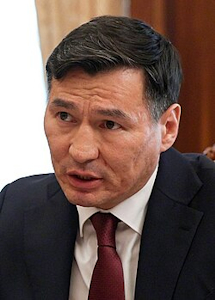
Batu Khasikov (born 1980)
Posted on October 18, 2025 at 12:29 PM
Dalai Batur: Oirat Leader of the Great Western Migration
Dalai Batur (also spelled Dalai Taishi or Dalai Batur Tayiji) was a prominent 17th-century Oirat noble and leader (taishi) of a contingent of the Dörbet (Derbet) tribe. He is best known for co-leading, alongside Kho Orluk of the Torghut tribe, the historic mass migration of Oirat groups westward from Dzungaria to the Volga River steppes, which laid the foundation for the Kalmyk Khanate - the only Buddhist state in Europe.
In the early 17th century, the Oirat confederation in western Mongolia and Dzungaria faced growing pressures: internal tribal disputes, overcrowding of pastures, conflicts with emerging powers like the Dzungars under Erdeni Batur, and external threats from Kazakhs and Khalkha Mongols. Around 1618-1630, Dalai Batur led a smaller but significant group of Dörbets in joining the larger Torghut migration under Kho Orluk. This movement involved an estimated 200,000-250,000 people and their herds traversing southern Siberia, raiding along the way to secure passage, and ultimately settling in the fertile lower Volga region by the 1630s.[1][2][3]
The migrants displaced local Nogai hordes and established a nomadic polity that swore nominal allegiance to the Russian Tsardom while maintaining autonomy. The Dörbets under Dalai Batur formed a key component of this new society, contributing to the multi-tribal structure of what became the Kalmyk Khanate. While the Torghuts dominated politically (with Kho Orluk's descendants as khans), the Dörbets integrated deeply, intermarrying and sharing governance under the 1640 Great Code of the Nomads.[1][4]
Limited details survive about Dalai Batur's personal life or later years, as historical records focus more on Kho Orluk and subsequent khans like Ayuka Khan. However, his decision to migrate preserved Dörbet traditions in a new homeland, ensuring the survival of Oirat Buddhist culture far from Central Asia. The Kalmyks, descendants of these migrants, remain Europe's sole indigenous Mongolic and Buddhist people.[2][3]
Dalai Batur's legacy endures in Kalmyk history as a co-founder of their European steppe heritage, symbolizing resilience amid nomadic upheavals.[1]
- [1] Kalmyks - Wikipedia
- [2] Kalmyk Khanate - Wikipedia
- [3] Oirats - New World Encyclopedia
- [4] Oirats - Wikipedia
Posted on December 23, 2025 at 01:18 PM
David Kugultinov (1922–2006)
David Kugultinov Wikipedia Page
Posted on October 18, 2025 at 11:18 AM
Dewa Nimbo (born c. 1940s)
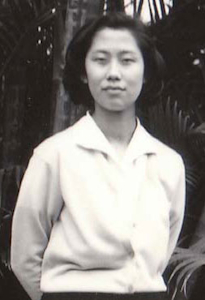
Oral History of the Mongols by Dewa Nimbo
Dewa Nimbo Profile
Posted on October 18, 2025 at 12:28 PM
Ella Manzheeva (born 1981)
Posted on October 18, 2025 at 11:50 AM
Erdne Ombadykow (born 1972)
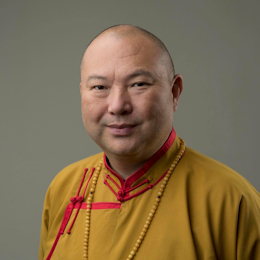
Erdne Ombadykow Wikipedia Page
Posted on October 18, 2025 at 11:48 AM
Eugenia Mandzhieva (born 1985)
Eugenia Mandzhieva Wikipedia Page
Posted on October 18, 2025 at 11:51 AM
Galdan Boshugtu Khan (1644–1697): The Oirat Leader and His Legacy in Kalmyk History
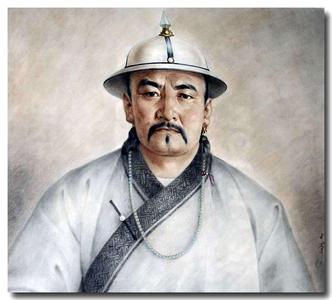
Galdan Boshugtu Khan (1644–1697), a prominent figure in Oirat Mongol history, ruled as khan of the Dzungar Khanate from 1671 until his death, emerging as a unifier of the Oirat tribes and a formidable challenger to the Qing Dynasty.[1] As a descendant of Esen Taishi of the Northern Yuan and fourth son of Erdeni Batur, founder of the Dzungar Khanate, Galdan embodied the martial and spiritual traditions of the Oirats, ancestors of the modern Kalmyks. His life and campaigns significantly influenced the broader Oirat-Kalmyk narrative, representing a period of expansion and resistance that echoed in Kalmyk oral traditions and historiography long after their migration to the Volga region.
Born in 1644, Galdan was sent to Tibet at age 13, where he studied for two decades under the 5th Dalai Lama and the 4th Panchen Lama, mastering Buddhist philosophy, astronomy, medicine, and other sciences.[2] This religious education shaped his worldview, earning him the title "Boshugtu Khan" (meaning "sacred" or "blessed") from the Dalai Lama in 1679. Upon the murder of his brother Sengge in 1671 by rival half-brothers, Galdan renounced his monastic vows, returned to Dzungaria, and avenged the death with support from Ochirtu Khan of the Khoshut. By 1678, he had consolidated power over the Oirats, marrying Sengge's widow, Queen Anu, and establishing a centralized rule that promoted Gelug Buddhism among the tribes.
Galdan's military achievements expanded Oirat influence across Central Asia. In 1677, at the Dalai Lama's behest, he conquered Altishahr (the Tarim Basin), overthrowing the Black Mountain Khoja and installing Afaq Khoja as a puppet ruler, securing control over Kashgar, Yarkant, Turfan, and Hami by 1682.[3] He subjugated the Kazakhs, defeating Tauke Khan and occupying territories up to Tashkent and the Syr Darya, while ravaging the Fergana Valley. These conquests marked the zenith of Dzungar power, fostering trade and cultural exchanges that enriched Oirat society.
However, Galdan's ambitions led to devastating conflicts. In 1688, he invaded Khalkha Mongol territories, allying briefly with Russia and forcing the Jebtsundamba Khutuktu to flee, but this provoked Qing intervention under Emperor Kangxi.[4] The ensuing Dzungar-Qing wars culminated in defeats, including the 1696 Battle of Zuunmod, where Queen Anu perished heroically. Betrayed by his nephew Tsewang Rabtan and reduced to a few followers, Galdan committed suicide by poison in the Altai Mountains near Khovd on April 4, 1697.
In Kalmyk history, Galdan represents the enduring spirit of Oirat unity and resistance against imperial forces, themes preserved in Kalmyk folklore and epics like the Jangar cycle.[5] While the Kalmyks had migrated westward to the Volga by the early 17th century, Galdan's era in the remaining Oirat heartlands reinforced their shared identity as descendants of Genghisid legacies. His promotion of Buddhism aligned with Kalmyk adoption of Gelug traditions, and his story is commemorated in Kalmyk literature, such as "The Story of the Oirat Galdan Boshoktu-Khan." Today, he symbolizes Oirat resilience amid historical dispersions, influencing cultural revivals in Kalmykia and beyond.
- [1] Galdan Boshugtu Khan - Wikipedia
- [2] Historical And Cultural Heritage Of Kalmyks, Their Ancestors, Oirats - European Proceedings
- [3] Kalmyk and Oirat Rulers - De Gruyter Brill
- [4] Why did Galdan Boshigt, the Khan of Dzungaria, fought against the Khalkha Mongols? - Quora
- [5] Were the historical Oirats “Western Mongols”? - OpenEdition Journals
Posted on November 25, 2025 at 06:19 AM
Garja Muschajew (born c. 1925)
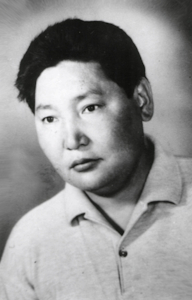
Garja Muschajew Audio Collection Page
Train pulling wagons - Gordon Bok Audio Collection
Chestnut horse's gallop – Gordon Bok Collection
Posted on October 18, 2025 at 11:23 AM
Geshe Ngawang Wangyal (1901–1983): Kalmyk Buddhist Scholar and Lama and Key Figure in the Dalai Lama's 1959 Escape
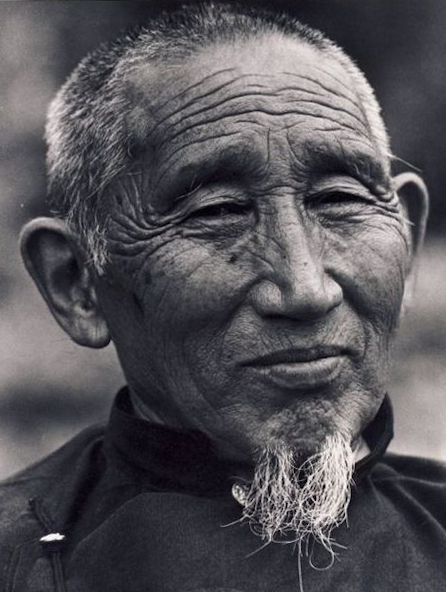
Geshe Ngawang Wangyal (1901-1983), a groundbreaking Kalmyk-Mongolian Buddhist scholar and monk, holds a unique place in the history of Tibetan Buddhism in the West. Born in the Astrakhan Governorate of Russia (now part of Kalmykia), he received his early monastic education in Kalmyk khuruls before traveling to Tibet in 1922, where he studied at Drepung Gomang Monastery and earned his geshe lharampa degree - the highest academic honor in Gelug Tibetan Buddhism. After earning his degree and fleeing Soviet persecution in Kalmykia, he arrived in the United States in February 1955 as part of a group of Kalmyk refugees resettled in Freewood Acres (now part of Howell Township), New Jersey. The Kalmyk community had already established their first temple, Rashi Gempil-Ling ("Sanctuary for the Increase of Auspiciousness and Virtue"), the first Kalmyk and Tibetan Buddhist temple in the Western Hemisphere.
Upon arrival, Geshe Wangyal sought to affiliate with the local Kalmyk Buddhist sangha and primarily associated with Rashi Gempil-Ling, where he contributed as a spiritual leader and teacher in the early years. As the highest-qualified scholar (with training in Kalmykia and Tibet), he supported rituals, teachings, and the preservation of Gelugpa traditions among the resettled Kalmyks.
Recognizing the need to transmit authentic Tibetan Buddhist teachings more broadly - especially to Western students interested in scholarly study and practice - Geshe Wangyal founded an independent center in 1958: the Lamaist Buddhist Monastery of America (LBMA), initially in Freewood Acres. This became the first dedicated Tibetan Buddhist dharma center in the West focused on rigorous academic and meditative training. In the late 1960s, he relocated it to Washington, New Jersey, renaming it Labsum Shedrub Ling (Tibetan Buddhist Learning Center), where it continues today. He trained pioneering American scholars like Robert Thurman and Jeffrey Hopkins, hosted His Holiness the 14th Dalai Lama during his landmark 1979 U.S. visit (which Geshe Wangyal helped facilitate), and advanced the intellectual credibility of Tibetan Buddhism in academia and beyond.
Shortly after his arrival in the U.S., around 1956-1957, Geshe Wangyal was recruited by the Central Intelligence Agency (CIA) with the assistance of Thubten Jigme Norbu (Takster Rinpoche, 1922-2008), the eldest brother of His Holiness the 14th Dalai Lama. Norbu, who had emigrated to the U.S. under CIA sponsorship in October 1957, had known Geshe Wangyal from their earlier time in Lhasa. As the only qualified Tibetan scholar in the U.S. at the time, Geshe Wangyal was an ideal candidate for the agency's needs amid the escalating Cold War and Chinese occupation of Tibet. His recruitment was part of the CIA's covert Tibet program, code-named ST Circus (also referred to as the Tibet Task Force), aimed at supporting Tibetan resistance against communist expansion.
Geshe Wangyal's primary contribution to the CIA was developing a specialized Tibetan telecode - a dictionary and encoding system that adapted the Tibetan script for secure Morse code transmission over radio. This innovative tool enabled reliable, encrypted communications between CIA-trained Tibetan guerrillas (including radio operators parachuted into Tibet) and their U.S. handlers. The telecode was crucial for coordinating operations, transmitting intelligence, and maintaining contact with resistance networks in remote Tibetan regions.
This system played a direct and pivotal role in the Dalai Lama's dramatic escape from Tibet in March 1959. Amid rising tensions in Lhasa following the Tibetan uprising on March 10, the 14th Dalai Lama fled his summer palace (Norbulingka) disguised as a soldier, accompanied by a small entourage. CIA-trained Tibetan radio operators joined the escape party and used Geshe Wangyal's telecode to send Morse code messages detailing the group's progress, coordinates, and status. In a suburban house outside Washington, D.C., Geshe Wangyal himself worked alongside CIA officer John Greaney, monitoring the wireless receiver and translating incoming Morse code transmissions from Tibetan into English using the special dictionary he had created. This allowed the CIA - and indirectly U.S. policymakers - to track the escape almost in real time, long before the world press knew of the Dalai Lama's fate. The guerrillas also employed the telecode to request political asylum from Indian Prime Minister Jawaharlal Nehru on behalf of the Dalai Lama, his cabinet, and family, facilitating their safe crossing into India on March 31, 1959. Without this secure communication capability, the escape might have faced greater risks from pursuing Chinese forces.
Geshe Wangyal continued his CIA contract work through 1960, after which he stepped away as the Tibet program evolved (it continued until the early 1970s under shifting U.S.-China relations). His involvement remained classified for decades, separate from his public spiritual activities.
Geshe Wangyal trained a remarkable group of Western students who became foundational figures in the academic and cultural transmission of Tibetan Buddhism in America. Among his most famous students were:
- Robert A. F. Thurman, Professor Emeritus of Indo-Tibetan Buddhist Studies at Columbia University, president and co-founder of Tibet House US, and author of numerous books on Tibetan Buddhism. Thurman was one of Geshe Wangyal's earliest resident students in the early 1960s, became the first American ordained as a Tibetan Buddhist monk (in 1964 by the Dalai Lama, whom Geshe Wangyal introduced him to), and later earned his PhD in Buddhist Studies. He credits Geshe Wangyal as his first guru and a life-saving influence.
- Jeffrey Hopkins, Professor Emeritus at the University of Virginia and a prolific translator of Tibetan Buddhist texts. Hopkins studied intensively under Geshe Wangyal starting in the early 1960s, contributing to the center's development while learning Tibetan and Buddhist philosophy. He went on to establish pioneering programs in Tibetan studies and served as the Dalai Lama's chief English translator for many years.
- Joshua and Diana Cutler, long-time directors of the Tibetan Buddhist Learning Center (Labsum Shedrub Ling), who began studying with Geshe Wangyal in the early 1970s. They oversaw major translation projects, including Tsongkhapa's Great Treatise on the Stages of the Path to Enlightenment.
- Other notable students included scholar and translator Alexander Berzin (founder of Study Buddhism), Anne C. Klein (Professor at Rice University and co-founder of Dawn Mountain Center), composer Philip Glass, painter Ted Seth Jacobs, and scholars like Leonard Zwilling, Michael J. Sweet, and Daniel P. Brown.
These students, often in exchange for teaching English to Tibetan monks sponsored by Geshe Wangyal, formed the first generation of Western Tibetan Buddhist scholars and practitioners. Geshe Wangyal's emphasis on rigorous textual study, language proficiency, and philosophical foundations helped establish Tibetan Buddhist studies as a serious academic field in the U.S., making him widely regarded as the "grandfather" of the discipline.
For the Kalmyk community, Geshe Wangyal represents resilience: bridging refugee hardships, Cold War geopolitics, and the global spread of the Dharma. His legacy endures through Labsum Shedrub Ling, which carries forward his vision of study and practice, while Rashi Gempil-Ling remains active in Howell, NJ, preserving Kalmyk traditions.
- [1] Ngawang Wangyal - Wikipedia
- [2] Geshe Ngawang Wangyal and Tibetan Buddhism in America - Tricycle
- [3] Geshe Ngawang Wangyal: America's First Pioneering Buddhist Lama - Tsem Rinpoche
- [4] History - Labsum Shedrub Ling
- [5] Rashi Gempil-Ling Buddhist Temple - Official Site
Posted on February 26, 2026 at 07:13 PM
Jean Djorkaeff (born 1939)
Posted on October 18, 2025 at 11:33 AM
Kalmyk Chess Prodigy Roman Shogzhiev Wins World Blitz Championship

A talented young chess player from Kalmykia, Roman Shogzhiev, triumphed at the World Blitz Championship for players under 18 years old, held in Serbia.
This victory underscores the strong chess tradition in the Republic of Kalmykia, where the sport holds cultural significance and Elista has historically hosted major international tournaments.
- [1] Vesti Kalmykia - Roman Shogzhiev from Kalmykia became the winner of the World Blitz Championship
- [2] MK-Kalm.ru - Kalmyk wunderkind won the world championship
Posted on April 22, 2026 at 06:40 AM
Kirsan Ilyumzhinov (born 1962)
https://kirsan.today
Kirsan Ilyumzhinov Wikipedia Page
Posted on October 18, 2025 at 11:34 AM
Kosi Unkow (1899–1994)
Kosi Unkow (also spelled Kosi Unkov or Kosi Unkova, circa 1899–1994), an elderly Kalmyk refugee living in California, provided the foundational voice recordings that shaped the distinctive language of the Ewoks in Star Wars: Episode VI – Return of the Jedi (1983).[1] Her narration of traditional Kalmyk folk tales and songs in her native Kalmyk Oirat language - a Mongolic tongue spoken by the Kalmyk people - served as the primary inspiration for "Ewokese," the chattering speech of the furry inhabitants of Endor's forest moon.
Born in 1899 in the village of Batlaevka within the Russian Empire's Kalmyk steppe regions, Kosi Unkova experienced the upheavals of the early 20th century, including the Russian Revolution and subsequent migrations.[2] Like many Kalmyks, she fled westward during the civil war and World War II eras, eventually emigrating to Europe and then settling in the United States, where she resided in California with her family. By the early 1980s, at approximately 80–84 years old, she maintained fluency in Kalmyk, a language rooted in Oirat traditions and preserved through oral storytelling amid diaspora.
In 1982, sound designer Ben Burtt, tasked with creating an exotic yet primitive alien language for the Ewoks, heard Kalmyk in a linguistic documentary and found its phonetic qualities—harsh consonants, rhythmic intonation, and unfamiliar cadence—ideally "alien" to Western ears.[3] After research, Burtt located Unkova through her family's connections in the Bay Area. She recorded sessions recounting Kalmyk folklore, legends, and songs in her raspy, elderly voice. These authentic samples formed the core of Ewokese, which Burtt then layered with influences from Tibetan, Nepali, and other sources, speeding up and modulating the recordings for a higher-pitched, childlike effect.
Voice actors, including those portraying specific Ewoks, imitated and varied Unkova's delivery to produce the film's iconic chatter—phrases like "Yub nub" (celebration) and "Yaa-yaah" derived indirectly from her Kalmyk narrations.[4] For scenes where C-3PO "translates" Ewokese, actor Anthony Daniels collaborated with Burtt to invent dialogue based on these Kalmyk foundations. Unkova's contribution ensured Ewokese conveyed emotional depth without subtitles, enhancing the creatures' primitive charm and aiding their pivotal role in defeating the Empire.
Unkova's involvement highlights the unexpected intersections of Kalmyk diaspora heritage with global popular culture, bringing a critically endangered language (UNESCO-classified as vulnerable) to billions.[5] She passed away in 1994 at age 95, unaware of the full cultural impact, yet her voice endures in one of cinema's most beloved franchises. In Kalmykia and among Oirat communities, her story symbolizes resilience, with renewed interest fostering language preservation efforts tied to this Star Wars legacy.
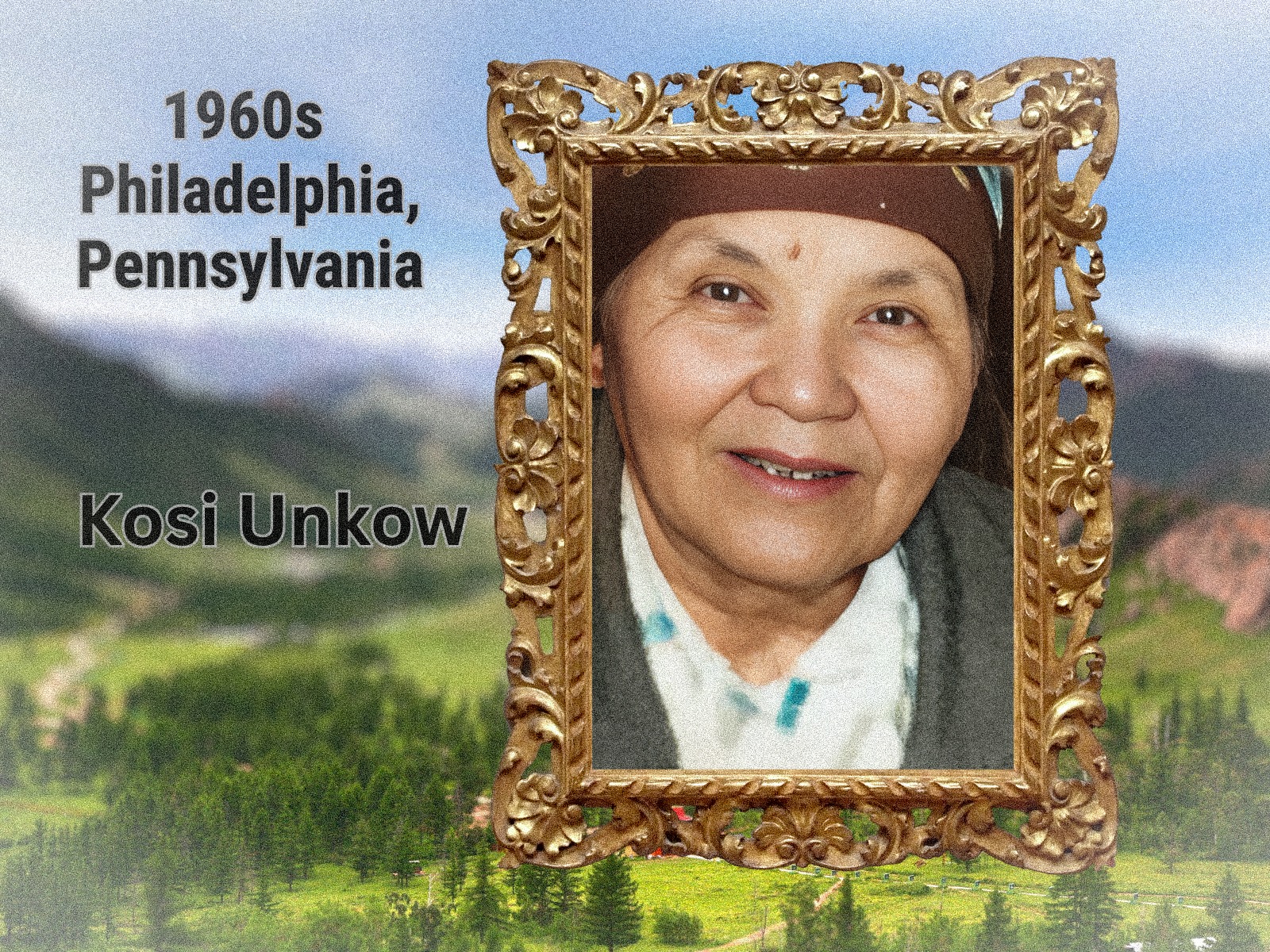 Image couresy of
Ben Moschkin
and Kalmyk Road
Image couresy of
Ben Moschkin
and Kalmyk Road
- [1] Ewok - Wikipedia
- [2] Did you know that Ewoks from ‘Star Wars’ speak Kalmyk!? - Russia Beyond
- [3] Ewokese | Wookieepedia | Fandom
- [4] Stars Wars: Amazing connections of an epic space saga with Mongolia - Mongolianz
- [5] One Random 80-Year-Old Woman’s Contribution to ‘Star Wars’ - FandomWire
Posted on November 21, 2025 at 05:28 PM
Lyudmila Bodniyeva (born 1978)
Lyudmila Bodniyeva Wikipedia Page
Posted on October 18, 2025 at 11:49 AM
Mingiyan Beveyev (born 1995)

Mingiyan Beveyev Wikipedia Page
Posted on October 18, 2025 at 12:04 PM
Mingiyan Semenov (born 1990)
Mingiyan Semenov Wikipedia Page
Posted on October 18, 2025 at 12:03 PM
Oka Gorodovikov (1879–1960)
Oka Gorodovikov Wikipedia Page
Posted on October 18, 2025 at 12:27 PM
Okna Tsahan Zam (born 1957)
Okna Tsahan Zam Wikipedia Page
Posted on October 18, 2025 at 11:34 AM
Sanan Sjugirov (born 1993)
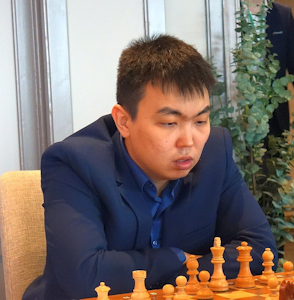
By Stefan64 - Own work, CC BY-SA 4.0
Sanan Sjugirov Wikipedia Page
Posted on October 18, 2025 at 12:29 PM
Sandje Ivanchukov (1960–2007)

Sandje Ivanchukov Wikipedia Page
Posted on October 18, 2025 at 11:45 AM
Sandscha Buruschkin (1907–1983)
Sandscha Buruschkin Audio Collection Page
Posted on October 18, 2025 at 11:16 AM
Tayishi Kho Orluk (1580-1644): Founder of the Kalmyk Migration and Khanate
Kho Orluk (also spelled Ho Örlög or Kho Örlök; c. 1580-1644) was a prominent Oirat prince and tayishi (taishi, a high noble title) of the Torghut tribe. He is revered as the leader who orchestrated one of the most remarkable nomadic migrations in history, guiding tens of thousands of Oirat families westward from Dzungaria to the Volga steppes, laying the foundation for the Kalmyk Khanate - the only Buddhist polity in Europe.
In the early 17th century, the Oirat confederation in western Mongolia and Dzungaria faced internal conflicts, pressure from emerging powers like the Dzungars, and disputes over grazing lands. Around 1616-1618, Kho Orluk convinced Torghut nobles and a contingent of Dörbet tribes to undertake a mass migration. Leading an estimated 200,000-250,000 people with their herds, they traversed southern Siberia, followed the Emba River, and reached the fertile pastures along the lower Volga River by the 1630s.[1][2]
Upon arrival, Kho Orluk's forces subdued local Nogai tribes and other Muslim nomads with relative ease, securing the territory. He established alliances with the Russian Tsardom, which welcomed the Oirats as a buffer against southern threats. This migration marked the birth of the Kalmyk people (from the Turkic term for "remnant," referring to those who stayed behind in the west) and their distinct identity as European steppe nomads practicing Tibetan Buddhism.[1][3]
Kho Orluk died in 1644 during a campaign against Nogais in the North Caucasus. He was succeeded by his sons, including Shukhur Daichin, and later his grandson Ayuka Khan, under whom the Kalmyk Khanate reached its zenith in the late 17th and early 18th centuries. Kho Orluk's leadership ensured the survival and autonomy of his people for over a century.[2]
Today, Kho Orluk is celebrated in Kalmyk history and folklore as a visionary leader whose bold decision preserved Oirat traditions in a new homeland, making the Kalmyks the westernmost Mongolic group and Europe's sole indigenous Buddhist community.[3]
Posted on December 18, 2025 at 10:24 AM
Tendzin Choidak (Mutul Ovyanov): Shajin Lama of Kalmykia
Geshe Tendzin Choidak, known in secular life as Mutul Vladimirovich Ovyanov, is a prominent Kalmyk Buddhist monk and the current Shajin Lama (Supreme Lama) of the Republic of Kalmykia in Russia. He holds the distinguished title of Geshe Lharampa, the highest academic degree in Gelug Tibetan Buddhism, and serves as abbot of the Golden Abode of Buddha Shakyamuni (Burkhn Bagshin Altn Sume), the largest Buddhist temple in Europe, located in Elista.[1][2]
Born in Kalmykia, Tendzin Choidak pursued advanced Buddhist studies in India, where he trained under renowned teachers such as Geshe Jampa. He earned his Geshe degree in the post-Soviet era, becoming one of the first Kalmyks to achieve this honor. His education emphasized Tibetan language, Buddhist philosophy, logic, and dialectics.[3][4]
In May 2022, he was appointed abbot of the Central Khurul (monastery) in Elista. The Kalmyk monastic Sangha elected him as one of three candidates, and His Holiness the 14th Dalai Lama approved his appointment as Shajin Lama in February 2023. His formal enthronement ceremony took place on March 18, 2023, in the Golden Abode temple.[1]
As Shajin Lama, Tendzin Choidak leads the revival and preservation of Tibetan Buddhism among the Kalmyks, Europe's only indigenous Buddhist population. He oversees religious ceremonies, educational programs, and interfaith activities. He has represented Kalmyk Buddhists at events in other Russian Buddhist regions like Tuva and has been involved in high-profile occasions, such as receiving sacred relics of the Buddha from India in 2025. His leadership emphasizes continuity with Gelug traditions while adapting to modern contexts in Russia.[2][5]
Tendzin Choidak's role underscores the enduring Buddhist heritage of the Kalmyks, descendants of Oirat Mongols, and contributes to the spiritual life of the community amid ongoing cultural preservation efforts.[1]
- [1] Tibetan Buddhism in Kalmykia 2023 - Study Buddhism
- [2] New Buddhist Monastery Consecrated in Tuva - Buddhistdoor Global
- [3] Мутул Владимирович Овьянов - Cyclowiki
- [4] Шаджин Ламой Калмыкии утвержден геше Тендзин Чойдак - РИА Калмыкия
- [5] India to Showcase Buddha's Sacred Relics in Russia's Kalmykia - ANI News
Posted on November 21, 2025 at 05:28 PM
Tsem Rinpoche (1965–2019)

Tsem Rinpoche Wesbsite
Tsem Rinpoche Wikipedia Page
Posted on October 18, 2025 at 11:39 AM
Youri Djorkaeff (born 1968)
Youri Djorkaeff Wikipedia Page
Posted on October 18, 2025 at 11:45 AM
Zeren Dorscha "Butchy" Sochorow (born 1967)

Butchy Sochorow Facebook Profile
Splintered Sunlight Website
Splintered Sunlight Facebook Profile
Posted on October 18, 2025 at 11:35 AM