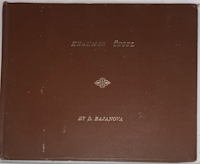
"Khal'mag uzgel" by Danara Bajanov
Kalmyk-language primer on Todo Bichig (Clear Script)
"Khal'mag uzgel" translates to "Kalmyk script" or "Kalmyk letters." It is the title of a Kalmyk-language primer or alphabet book (букварь in Russian), focused on teaching the Todo Bichig (Clear Script), the traditional vertical Mongolian-derived script adapted specifically for the Kalmyk (Oirat) language in the 17th century by Zaya Pandita. From scholarly references in Kalmyk studies and publications by the Kalmyk Institute for Humanities of the Russian Academy of Sciences (КИГИ РАН), this book was authored by Danara Bajanov and was created as a teaching tool for the Kalmyk diaspora and taught in Howell, NJ.
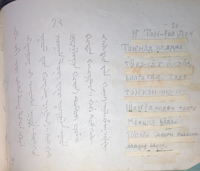
Key Context and History
-
Publication and Purpose:
The book was used in Howell, New Jersey in order to teach kids Kalmyk language. Literacy in Todo Bichig had declined under Soviet Cyrillic reforms (introduced in the 1920s-1930s for Kalmyk), so primers like this preserved cultural identity, language, and script among exiles. -
Content and Style:
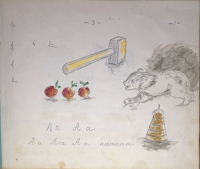
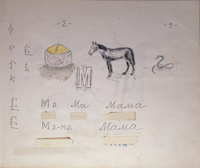
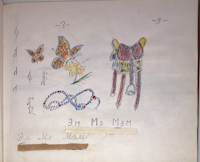
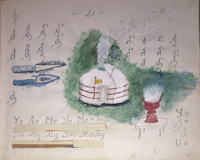
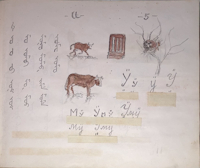
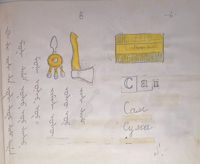
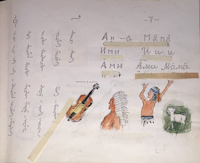
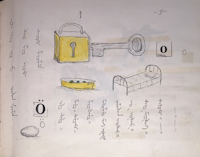
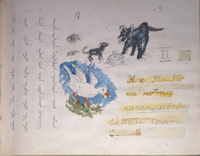
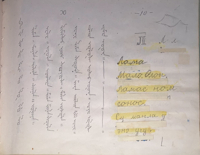
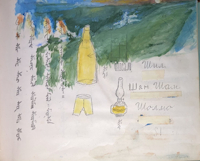
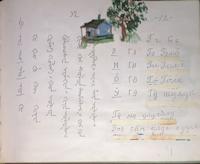
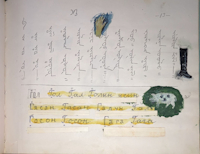
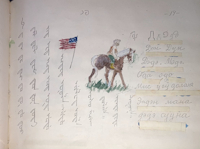
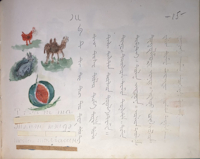
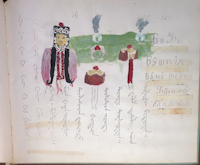
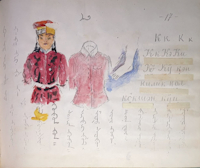
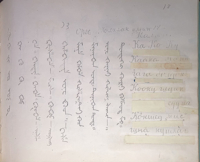
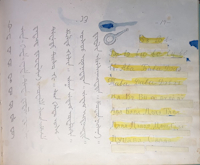
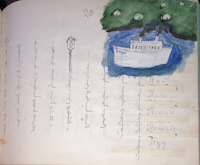
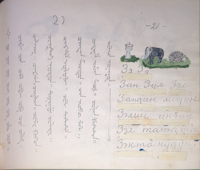
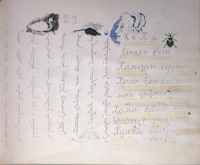
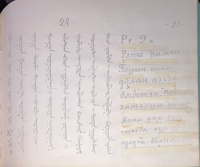
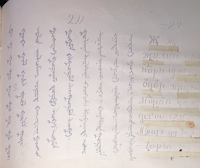
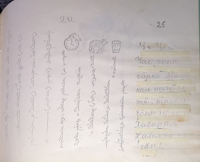
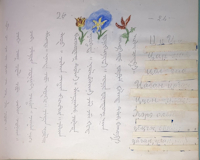
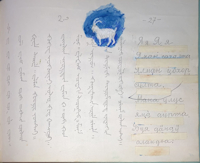
As a букварь (primer), it likely includes: Todo Bichig alphabet with letter forms, pronunciations, and basic combinations. Simple exercises, words, and short texts (e.g., everyday vocabulary, perhaps cultural or folk elements like animals, yurts, horses-mirroring the doodles you've shared: morin/horse repeats, ger/yurt, tools). Illustrations or simple drawings to aid learning, especially for children or adults relearning the script. Pages-with repeated "morin" practice strokes, labeled objects (knife, shovel, axe, pendant, morin khuur fiddle), mixed Cyrillic notes ("Ами Мама"), and folk-art style-align perfectly with a learner's workbook or annotated primer. The vertical script practice, doodles of steppe life (horses, ger, dance, lamb), and baby-talk Cyrillic feel like a child's or beginner's exercises in such a book. -
Cultural Significance:
In the Kalmyk diaspora community in Howell, books like this were vital for transmitting heritage. Todo Bichig symbolizes pre-Soviet identity and Oirat-Mongol roots, distinct from Khalkha Mongolian. -
Nuances and Related Considerations:
Authorship Details: Danara Bajanov is referenced in works on Kalmyk émigré printing and education collaborating on script-teaching materials during the DP era. Script Specifics: Todo Bichig (Clear Script) was designed to better represent Oirat vowels/consonants than classical Mongolian script. The books doodles show classic features: tall "m" curls for morin (ᡏᡅᠷᡅᠨ), stacked columns, vowel diacritics as hooks/dots. Today, Todo Bichig is taught optionally in Kalmykia schools and online (e.g., via Kalmyk cultural sites). Books like this are collectible heritage items versions sometimes circulate in academic archives or diaspora groups. The book that was the source for these images appear to have been used, so the book may not be in it's original form.