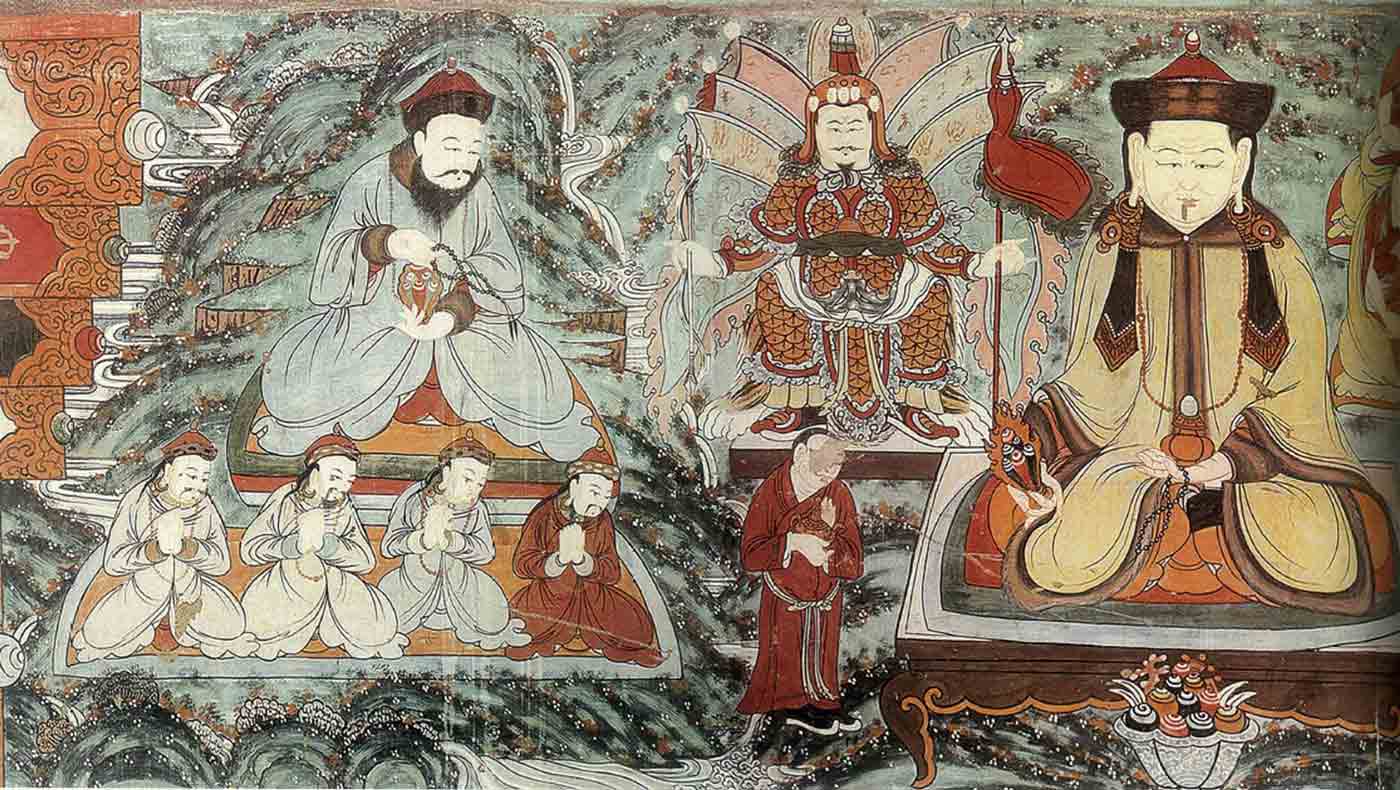
The institution of the Dalai Lama, central to Tibetan Buddhism's Gelug school, has maintained profound historical, religious, and political alliances with Mongol peoples, including the Kalmyks - Europe's only indigenous Buddhist and Mongolic community. These ties trace back to the 13th century during Genghis Khan's era, when Mongol patronage helped spread Tibetan Buddhism across Inner Asia. Over centuries, alliances involved military support, spiritual endorsements, and cultural exchanges, evolving from conquests and titles to modern visits fostering revival amid suppression.[1][2]
The foundational alliance began in 1578 when Altan Khan, ruler of the Tümed Mongols, invited Sonam Gyatso (retroactively the 3rd Dalai Lama) to Mongolia. Altan bestowed the title "Dalai Lama" (meaning "Ocean of Wisdom") on Sonam Gyatso, formalizing a guru-disciple relationship. In return, Sonam Gyatso conferred the title "Chakravartin" (universal ruler) on Altan, legitimizing his authority through Buddhist cosmology. This pact marked the widespread adoption of Gelug Buddhism among Mongols, with Altan's descendants continuing patronage. The alliance blended spiritual guidance with political power, as subsequent Dalai Lamas influenced Mongol khans' successions and policies.[3][4]
A pivotal military alliance occurred in the 17th century with the Oirat Mongols, ancestors of the Kalmyks. Güshi Khan of the Khoshut Oirats, a devout Gelug follower, invaded Tibet in 1642 at the request of the 5th Dalai Lama, Ngawang Lobsang Gyatso. Güshi defeated rival sects and the Tsang kings, unifying Tibet under Gelug control. He installed the 5th Dalai Lama as temporal ruler of Tibet, retaining nominal kingship while acting as protector. This "priest-patron" (chö-yön) relationship solidified Mongol influence in Tibet, with Oirats providing military backing against threats. The alliance extended to other Oirat tribes, including Torghuts and Dörbets who later migrated to form the Kalmyk Khanate.[5][6]
For the Kalmyks specifically, alliances stemmed from their Oirat heritage. After migrating to the Volga steppes in the 1630s, Kalmyk khans recognized the Dalai Lama's spiritual authority. Until the mid-17th century, the bestowal of the "Khan" title among Mongol tribes, including Oirats, was sanctioned by the Dalai Lama, reinforcing his role in legitimizing rulers. The 1640 Great Code of the Nomads (Iki Tsaadzhin Bichig), ratified by Oirat leaders, promoted Gelug unity and Buddhist ethics, binding Kalmyks to Tibetan traditions. In 1771, during Ubashi Khan's disastrous exodus back to Dzungaria, the Dalai Lama (likely the 6th or 7th) blessed the journey via astrological consultation, highlighting enduring ties despite geographic separation.[7][8]
In the modern era, alliances have focused on cultural and religious revival. The 13th Dalai Lama sought refuge in Mongolia (1904-1906) amid British invasion, strengthening bonds during Qing decline. Post-Soviet, the 14th Dalai Lama, Tenzin Gyatso, visited Kalmykia multiple times (1991, 1992, 2004), ordaining monks, consecrating temples like the Golden Abode of Buddha Shakyamuni in Elista, and supporting Buddhist education. These visits buoyed the Kalmyk community after Stalinist deportations (1943-1957) destroyed monasteries. The Dalai Lama's endorsements helped rebuild over 20 khuruls (temples) by the 1990s, emphasizing compassion and non-violence. Mongolian regions like Buryatia and Tuva also maintain ties, with the Dalai Lama advocating for autonomy and cultural preservation against Chinese pressures.[9][10]
These alliances reflect a symbiotic relationship: Mongols and Kalmyks provided protection and propagation for Tibetan Buddhism, while Dalai Lamas offered spiritual legitimacy and unity. Today, amid geopolitical tensions - including China's opposition to the Dalai Lama's succession - these bonds endure through pilgrimages, shared Gelug practices, and interfaith dialogues, preserving a unique Eurasian Buddhist heritage.[1][2]