The Epic of Jangar is a traditional oral heroic epic (tuuli) of the Kalmyk and Oirat Mongols, recited by specialized singers known as Jangarchi. It originates from the 15th century in the Jungaria region among the western Oirat Mongols and spread to regions like Kalmykia, Xinjiang, and Mongolia. The epic exists in various versions, with chapters ranging from 20-30 in some traditions to over 100 in others, and it is preserved in both oral and written forms using the Oirat Clear Script. It parallels other great Mongolian epics like the Epic of King Gesar and represents themes of heroism, loyalty, defense of the homeland, and the creation of an ideal society free from suffering, death, and injustice.[1][4]
The story revolves around the warrior-king Jangar, who as a child avenges his parents' death, defeats invaders like the devil Guljin (or Goljing), and establishes the paradisiacal kingdom of Bumba - a land of eternal summer, harmony, and abundance ruled from a nine-colored golden palace. Jangar, eternally youthful at age 25, leads an assembly of 6,012 superhuman warriors arranged in seven concentric circles around him. These heroes, often compared to knights in Arthurian legends, include figures like Scarlet Lion Khongor (or Hongor), Minian the Beautiful, Fat Belly Gyuzan Gyumbe (or Guzen Gumba), and Savr. Together, they defend Bumba against manggus devils, enemy khans, and raiders, expanding the realm through battles, alliances, and tributes.[1][2][3]
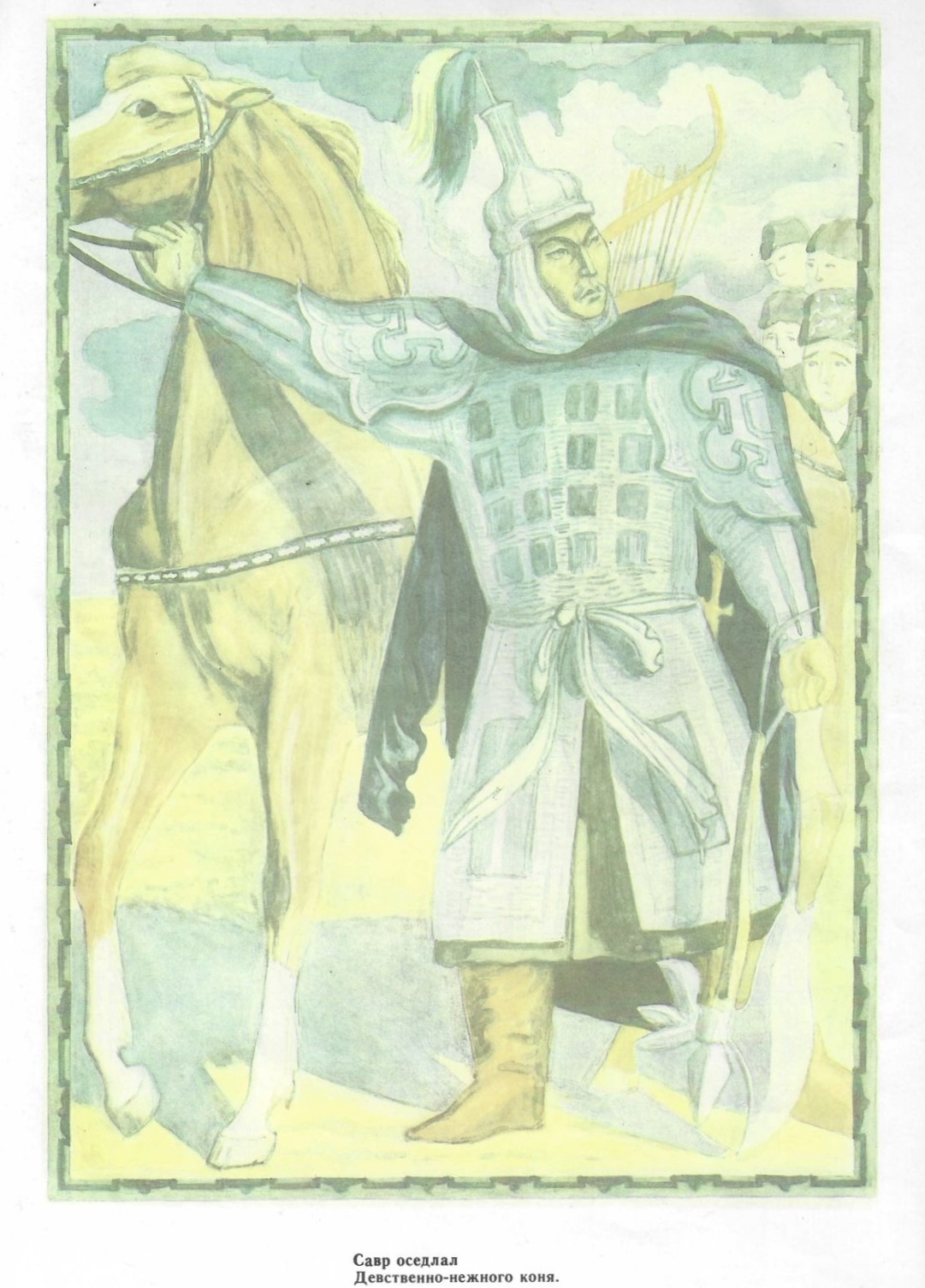
Savr, also transliterated as Savar Heavy Arm or Sabar, is one of Jangar's most indomitable and loyal boars-heroes (bogatyrs), positioned among the twelve elite warriors on Jangar's Right Wing. Described as a towering giant and "human falcon" tireless in battle, he hails from a legendary family and embodies raw strength, emotional depth, and fierce loyalty. Off the battlefield, Savr shows human vulnerabilities - he brags when intoxicated, cries and hugs in moments of emotion, and can act impulsively out of pride. His mount is the divine chestnut mare Kurung Galzan, valued at a thousand-thousands yurts, which possesses supernatural abilities like speaking and swift flight, often serving as his wise counselor and savior.[2][3]
Savr's primary weapon is his iconic twelve-blades axe (also called a black axe or sharp axe), an eighty-one-meter-long blade tempered in war flames, capable of shattering armor and crushing enemies. He also wields a seventy-one-meter yellow steel sword and a deadly whip plaited from bull leather, patterned like a snake's back, soaked in poison, and tipped with a burning steel plate. These tools underscore his role as a ferocious close-combat fighter who swings his axe from his mighty shoulder to deliver devastating blows.[3]
In the epic's cycles, Savr features prominently in several heroic feats. In Cycle 6, he joins Scarlet Lion Khongor to rescue the captured hero Mingian from Turk Altan's forces. Riding Kurung Galzan, Savr catches up to the enemy Togya Buse at the Golden Bridge, strikes his neck with the black axe (shattering fifty hooks of armor and knocking him unconscious), binds him with blue silk straps, and later captures Lanky Tsagan at the Silver Bridge. They drive back a herd of ten thousand pintos to Bumba and declare Turk Altan's khanate as a subject realm.[3]
In Cycle 8, Savr offers his twelve-blades axe to the hero Sanal for a mission and participates in the collective defeat of Kyuder Khan's army, capturing ten thousand white heroes, securing an alliance, and imposing taxes on the vanquished.[3]
The most detailed account of Savr is in Cycle 9, titled "How Savar Heavy Arm Defeated Kilgan Khan." Feeling unappreciated when Jangar excessively praises Khongor, Savr loses his temper out of pride and vows to leave Bumba to serve the enemy Shargul khans. Shocked and shamed, he departs despite immediate regret, ending up ignored and seated last in the enemy hall - reduced from a revered hero to "no one." Alone in his yurt that night, accompanied only by barking dogs, his horse Kurung Galzan rebukes him for childish behavior and reveals that Bumba has been attacked, Jangar captured by Kilgan Khan, and the khanate subjugated. Motivated to repay Jangar and redeem himself, Savr returns and single-handedly battles Kilgan for seven days, retreating briefly to Lion Mountain before charging again. He smashes Kilgan's ribs and vertebrae with his axe, captures him alive, ties him to his saddlebow, and forces eternal allegiance. Savr then liberates Jangar and the captured heroes from a cave, restoring Bumba's order.[2][3]
Savr's stories highlight themes of human fallibility, redemption, and unbreakable brotherhood in the Jangar cycle. His impulsive departure and heroic return emphasize the internal conflicts among the warriors, adding depth beyond mere battles. As a symbol of Oirat and Kalmyk cultural heritage, Savr represents the ideal nomadic hero - strong yet relatable, loyal despite flaws. The epic, including Savr's tales, has been transmitted orally for centuries.[1][2][4]