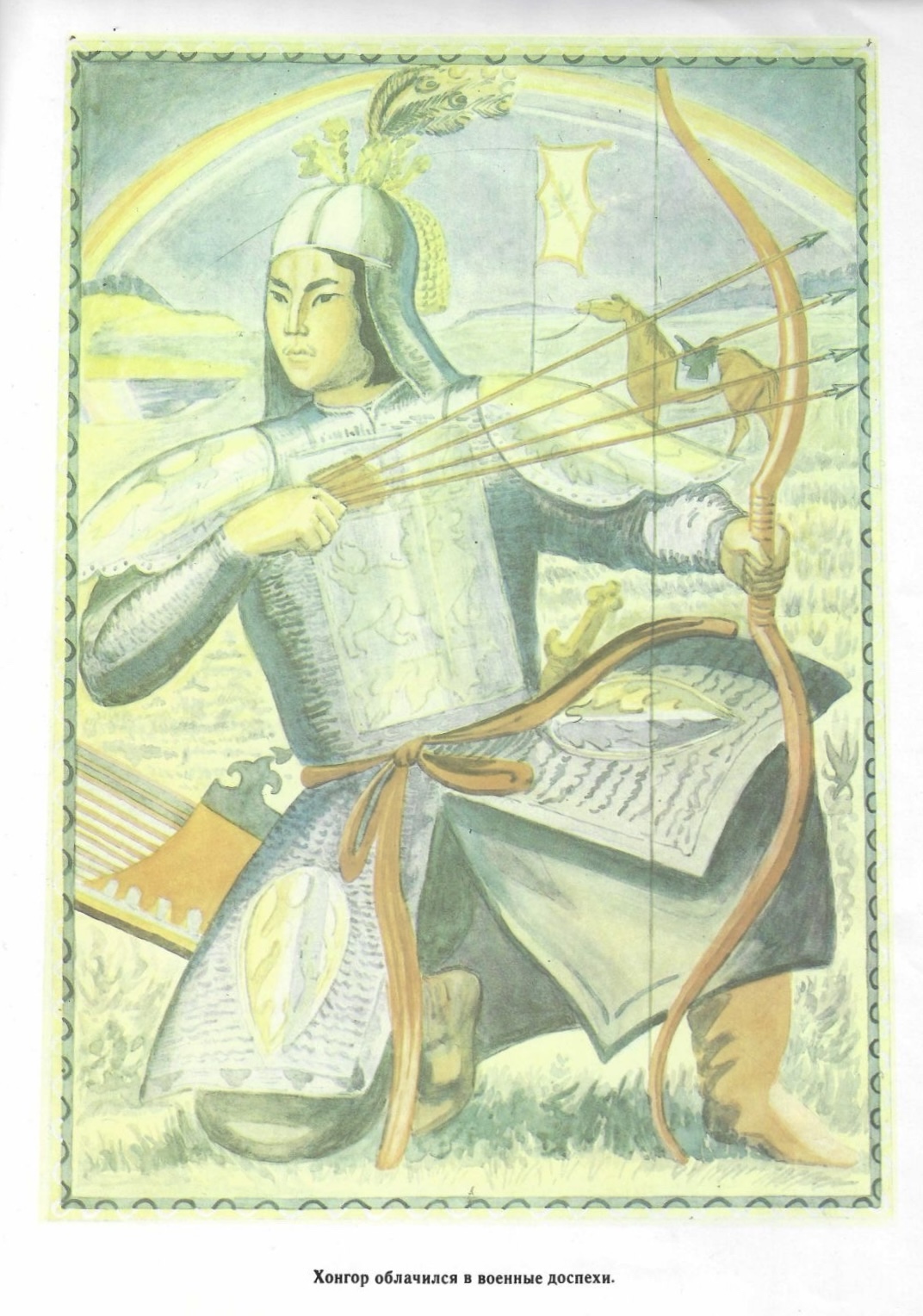
Hongor, known as "Asar ulagan Hongor" or "Giant red Hongor," stands as one of the principal warriors in the Epic of Jangar, the monumental oral tradition of the Oirat-Kalmyk people.[1] As a steadfast companion to the hero Jangar Khan, Hongor embodies the archetype of the loyal, indomitable fighter whose physical prowess and unyielding bravery drive the narrative's cycles of conflict and triumph. His character, marked by immense strength and a vivid physical description evoking a towering, ruddy figure, underscores the epic's celebration of heroic valor amid the vast Eurasian steppes.
Hongor's origins trace to the hunter and wrestler Mengen Xigxirge, whose initial antagonism toward the young Jangar sets the stage for pivotal alliances. During a fierce wrestling match, Mengen seeks to eliminate Jangar, fearing he might supplant his son as a rival. Hongor intervenes decisively, seizing Jangar and imploring his father for mercy, thereby sparing the future khan's life on the condition of a subsequent duel with the formidable Altan Gheej.[2] This act of compassion not only averts tragedy but also forges an enduring bond, transforming potential enmity into fraternal loyalty within Jangar's legendary band of 6,012 immortal warriors.
Throughout the epic's cantos, Hongor features prominently in feats of arms and personal quests, exemplifying the warrior's code. In the canto "Hündü Gartai Sabar-un Bölög," he clashes with monstrous foes like Sabar in a surreal sand-sinus battlefield, defending Bumba's sovereignty against invasive hordes.[3] His matrimonial adventures in the dedicated "Hongor's Wedding" canto further illuminate his narrative depth, aligning with the epic's recurring motif of heroic matrimony that blends romance with martial exploits. These episodes portray Hongor shedding tears of resolve before battle, torn between the peril of enemy blades and the repercussions of retreat under Jangar's command, thus humanizing his colossal stature with emotional vulnerability.
Hongor's significance extends beyond individual exploits to reinforce the epic's thematic pillars of unity, resilience, and ethical guardianship. As a microcosm of the Oirat confederation's nomadic ethos, he symbolizes the transition from familial rivalry to collective defense, mirroring historical migrations and inter-khanate dynamics.[4] His unwavering devotion—"throwing lives to the edge of spears" in service to Bumba—amplifies the poem's oral formulae, alliterations, and hyperbolic grandeur, preserving cultural memory through jangarchi singers despite eras of suppression.
In contemporary Kalmykia and Oirat communities, Hongor's archetype endures through scholarly editions, theatrical adaptations, and cultural festivals, such as those commemorating the epic's UNESCO-recognized heritage.[5] Translations like Saglar Bougdaeva's 2022 English rendition revitalize his legacy, offering global insights into Kalmyk identity as heirs to Genghisid traditions. Through Hongor, the Epic of Jangar not only chronicles mythic conquests but also affirms timeless ideals of loyalty and fortitude.