Introduction
Okon Tengri, also known as Ökon Tengri or Okn Tengr, is a revered goddess among the Kalmyk people, symbolizing fire, fertility, protection, and prosperity. Rooted in pre-Buddhist Tengrist and shamanistic traditions, she has been syncretized with the Tibetan Buddhist deity Palden Lhamo, serving as a fierce protector in Kalmyk spirituality.[3][7] Her significance extends to rituals, festivals, and legends that emphasize renewal, community well-being, and cultural identity, making her a vital element in the Kalmyks' blended religious heritage.[0][1]
Origins in Pre-Buddhist Beliefs
Okon Tengri originates from the ancient Tengrist beliefs of the Oirat Mongols, the ancestors of the Kalmyks, where she was worshipped as a goddess of fire and fertility with traces back to Turko-Mongolic traditions.[3] In this pre-Buddhist context, she embodied the feminine aspect of the sky and fire, invoked for protection, prosperity, and harmony with nature.[1][9]
As a deity of the hearth, she played a central role in nomadic life, ensuring family safety and abundance, reflecting the Kalmyks' shamanistic worldview before their 17th-century adoption of Buddhism.[1][3]
Syncretism with Buddhism
With the embrace of Gelug Tibetan Buddhism, Okon Tengri was assimilated into the pantheon as a local equivalent of Palden Lhamo, a wrathful protector deity who safeguards the Dharma and aids practitioners.[7][3] This syncretism preserved her pre-Buddhist attributes while framing her as a guardian against evil forces, illustrating the Kalmyks' adaptive spirituality.[1]
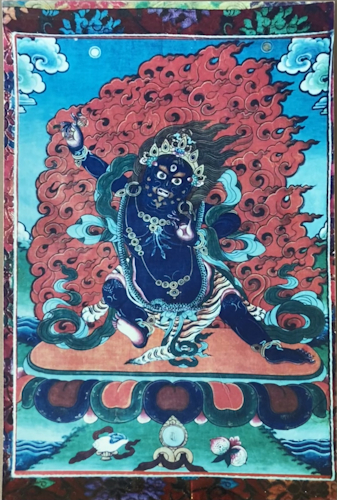
In Kalmyk temples and iconography, she is depicted with fierce attributes, blending ancient steppe symbolism with Buddhist elements to maintain cultural continuity.[7]
Rituals and Festivals
Okon Tengri is central to fire offerings and invocations for fertility and protection, performed by lamas and laypeople alike.[1] She features prominently in festivals such as Tsagan Sar (White Month), a lunar new year celebration involving rituals for prosperity and renewal, and Ur Sar (summer festival), honoring abundance and seasonal transitions.[0][9]
These communal events include prayers, offerings, and gatherings that reinforce her role in fostering community harmony and spiritual well-being.[0]
Legends and Symbolism
A key legend portrays Okon Tengri as a world savior who protected humanity from her monstrous son, born from a union with the king of mangus (monsters), highlighting her as a benevolent yet powerful guardian.[0] This narrative symbolizes the triumph of good over evil and her role in cosmic balance.[0]
Symbolically, she represents the end of winter and the arrival of spring, embodying renewal, fertility, and the transformative power of fire in Kalmyk folklore.[9][3]
Modern Relevance
In contemporary Kalmykia, Okon Tengri's cult continues to evolve, featured in exhibitions, rituals, and cultural revivals that blend Buddhism with ancestral traditions.[0][7] She remains important for ethnic identity and spiritual practices, even in diaspora communities, despite historical challenges like Soviet suppression.[1]
Conclusion
Okon Tengri's enduring importance to the Kalmyks exemplifies their rich syncretic heritage, bridging pre-Buddhist roots with contemporary faith. Her themes of protection and renewal continue to inspire, inviting further exploration through Kalmyk legends and sacred sites.