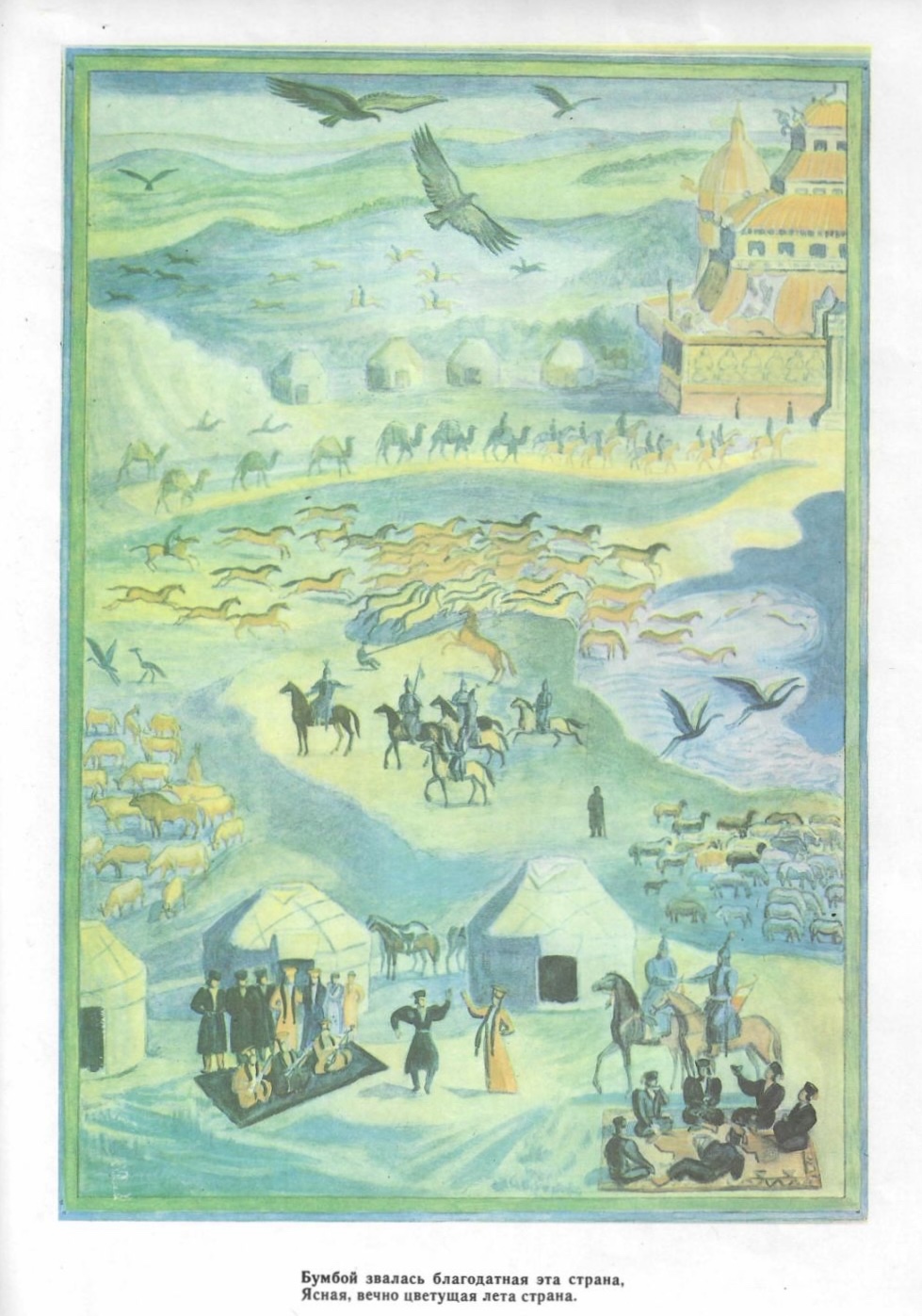
Bumba, a central element in the Epic of Jangar, represents an idealized mythical kingdom in Kalmyk oral tradition. This utopian realm, free from suffering, death, and injustice, serves as the narrative core of the epic, embodying the aspirations of the Oirat-Kalmyk people for prosperity and harmony.[1] Established as a paradise where environmental extremes are absent and communal sufficiency prevails, Bumba underscores themes of resilience and heroic guardianship against existential threats.
In the epic's foundational narrative, Bumba is settled by Jangar's great-grandfather, Takhi Zul Khan, after a decade of arduous migration and construction. Ruled initially from a resplendent golden palace, the kingdom faces recurrent calamities, including natural disasters that decimate livestock and invasions by formidable adversaries such as the Manggus Goljing.[2] These events culminate in the siege and slaughter of Jangar's family, prompting the infant hero's exile and eventual triumphant return. By reclaiming Bumba through feats of unparalleled valor, Jangar not only restores its sovereignty but also expands its dominion, quintupling its territory by vanquishing successive foes.
Bumba's structural role in the Epic of Jangar transcends mere geography; it functions as the cyclical axis of heroic cycles, with each chapter commencing and concluding in its grand banquet halls amid feasts and oaths of fealty.[3] This motif mirrors the nomadic confederation of Oirat khanates, symbolizing a union of seventy kingdoms bound by shared identity and mutual defense. Jangar, eternally youthful at twenty-five, leads his 6,012 warriors-each bonded symbiotically with their steeds-in perpetual vigilance, their oaths evoking profound devotion: "We throw our lives to the edge of the spears, Devote our passion to the Bumba completely."[4] Such elements highlight Bumba as a microcosm of ethical governance, where justice and communal welfare prevail under Jangar's wise rule.
The cultural significance of Bumba lies in its reflection of Kalmyk historical and existential yearnings, forged amid the Eurasian steppes' nomadic empires and subsequent displacements.[5] As a tribute to protectors and an allegory for unity, the epic-recited by specialized jangarchi singers-preserves Oirat heritage through oral transmission. Bumba encapsulates ideals of immortality, abundance, and peace, paralleling broader Mongolian literary pinnacles like the Epic of Gesar, and reinforces Kalmyk identity as descendants of Genghis Khan's legacy.
Today, Bumba's legacy endures in scholarly analyses, cultural revivals, and commemorative monuments in Elista, Kalmykia's capital, affirming the epic's role in sustaining national consciousness.[6] Through Jangar, Bumba not only narrates heroic restoration but also projects a timeless vision of societal perfection, vital to understanding Kalmyk resilience and worldview.