The White Month Festival in Kalmykia and the Mongolian World
Tsagaan Sar (Цаһан Сар / White Month) is the most important traditional holiday of the Kalmyk, Mongolian, Buryat, Tuvan and other Mongolic peoples. It is the celebration of the Mongolian lunisolar New Year, the arrival of spring, the awakening of nature after a long winter, purification, renewal and the beginning of a new life cycle.
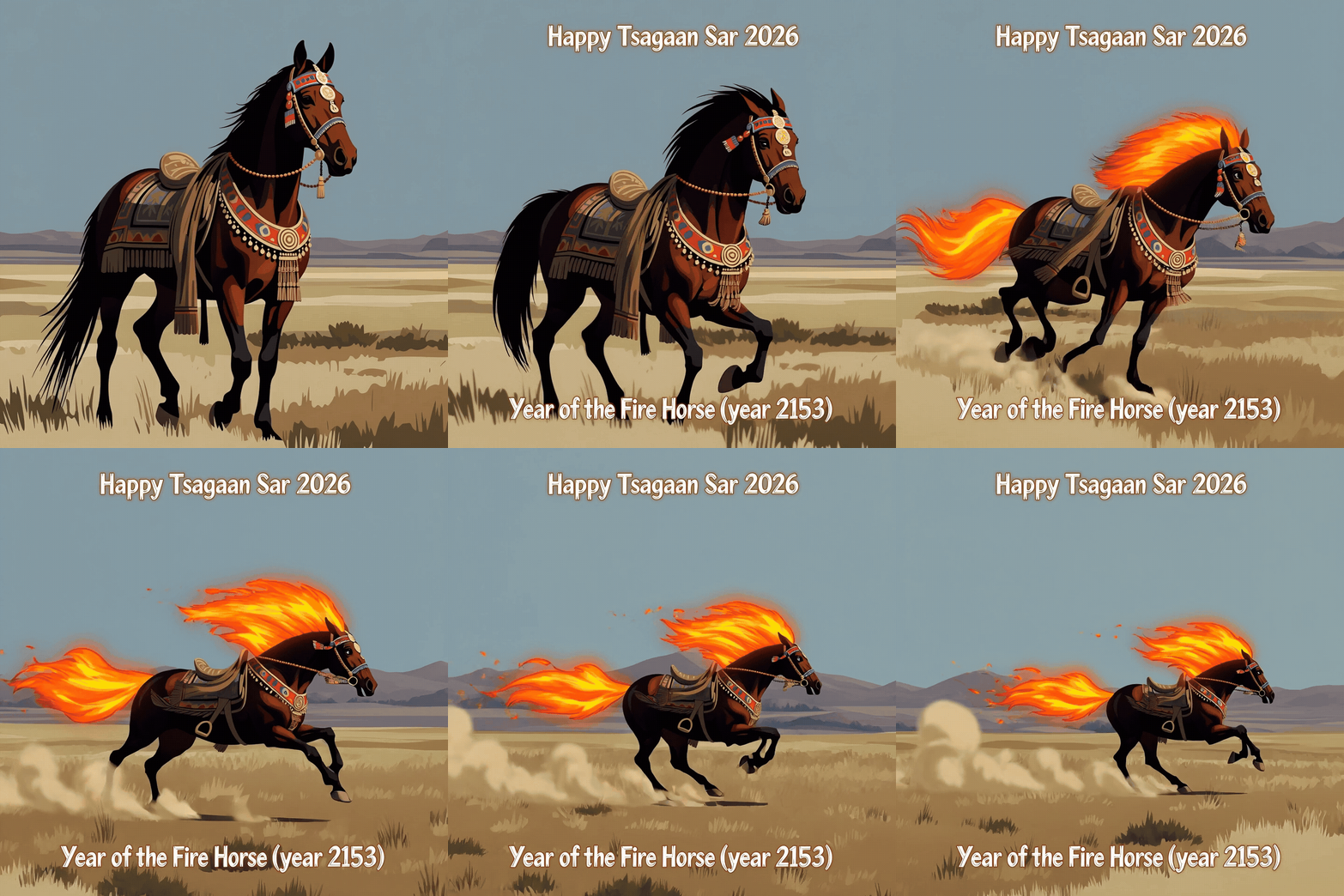
In 2026 Tsagaan Sar begins on February 18 and is celebrated for several days (February 18–20). In the Republic of Kalmykia it has been declared an official non-working public holiday. For many Kalmyk families and communities in Russia, the United States and the diaspora this year carries special meaning because it is the Year of the Fire Horse (also called the Red Horse or Male Fire Horse).
According to the 60-year cycle of the lunisolar calendar (which combines 12 animals and 5 elements), 2026 is the year of the Horse combined with the Fire element. This combination occurs only once every 60 years and is considered very powerful and dynamic. In the traditional Kalmyk and Mongolian reckoning, this marks the year 2153 in their historical calendar cycle.
The 2153 refers to the year count in the Tibetan-Mongolian (or Kalmyk) era, which is based on a 60-year cycle (known as a "jar" or "rabjung" in Tibetan tradition) that began in 1027 CE with the year of the Fire Hare (Red Rabbit). This system counts years sequentially from that starting point, so 2026 CE corresponds to 2153 in this reckoning (calculated roughly as Gregorian year minus 1026, adjusted for the cycle start). It is a traditional way to denote the year in Buddhist and nomadic contexts among Mongolic peoples, distinct from the Gregorian calendar used globally today. Some traditions may reference slightly different starting points or variants (like Tibetan cycles at 2153, 1772, or others), but for Kalmyks and many Mongols, 2153 aligns with the Fire Horse year in 2026.
The Horse in Mongolian and Buddhist symbolism stands for:
- speed • freedom • energy • vitality
- nobility • perseverance • travel and movement
- in Buddhist context - the vehicle that carries the practitioner swiftly along the path of Dharma
The Fire element adds very strong yang qualities:
- passion • transformation • illumination • purification
- intensity • rapid change • burning away of the old
- strong creative and destructive potential at the same time
Together Fire Horse is considered one of the most energetic and fast-moving signs of the entire 60-year cycle. Many people describe it as "double fire" energy — movement + heat. It is a year of:
- bold decisions and quick actions
- big changes and unexpected turns
- high potential for personal growth and new beginnings
- at the same time — possible restlessness, impulsiveness and the need for careful channeling of energy
In Tibetan and Mongolian Buddhist tradition the Fire Horse year is often seen as especially favorable for spiritual practice, pilgrimages, rituals and energetic Dharma work — provided the practitioner can direct this powerful wind-horse (lung-ta) energy in a wholesome direction.
Traditional Tsagaan Sar customs in Kalmykia largely follow the common Mongolic pattern with some unique regional touches:
- Deep house cleaning and purification before the holiday (saying goodbye to the old year's negativities)
- Preparation of huge amounts of white food — the symbol of the holiday (milk products of all kinds: cheese, cottage cheese, butter, cream, milk tea, as well as buuz / poses, khorkhog in some families, sweets)
- Wearing the best traditional clothes (especially beautiful deel / terlig for women)
- The ritual of zolgokh — respectful greeting of elders with the younger placing arms under the elder's elbows and receiving blessings
- Exchanging gifts, white hadag scarves, sweets and best wishes
- Many families visit khurul (temple), attend special prayers and make offerings
- Feasting, singing traditional songs, playing games and spending time with extended family
A key spiritual element in Kalmykia is the temple services at local khuruls, including the central Golden Abode of Buddha Shakyamuni in Elista. Special rituals often begin on the eve of Tsagaan Sar (February 17, known as Bituun or the closing day of the old year). In many khuruls, monks hold an extended or vigil-like service that continues through the night, lasting until sunrise on February 18. This all-night practice helps purify negativities, accumulate merit, and welcome the new year with prayers, chanting, offerings to deities like Okon Tengri (the Kalmyk patroness), and rituals aligned with the lunar transition. For the public, participation is usually split to accommodate families: attendees may join in the evening, leave at night for rest at home, and return early (often around 6 a.m.) to greet the first sunrise of the new year with collective prayers and blessings. These sunrise moments are especially auspicious, symbolizing renewal and good fortune for the year ahead.
Because of its very powerful and fast energy, many lamas and elders advise people in the Year of the Fire Horse to keep mindfulness, avoid unnecessary conflicts, direct their energy constructively and especially cultivate compassion and patience.
For the Kalmyk people — both in the republic and in the worldwide diaspora — Tsagaan Sar 2026 (year 2153) is welcomed with special joy as the Fire Horse gallops in, carrying the promise of renewal, movement and bright new beginnings.
Happy Tsagaan Sar 2026! 🔥🐎